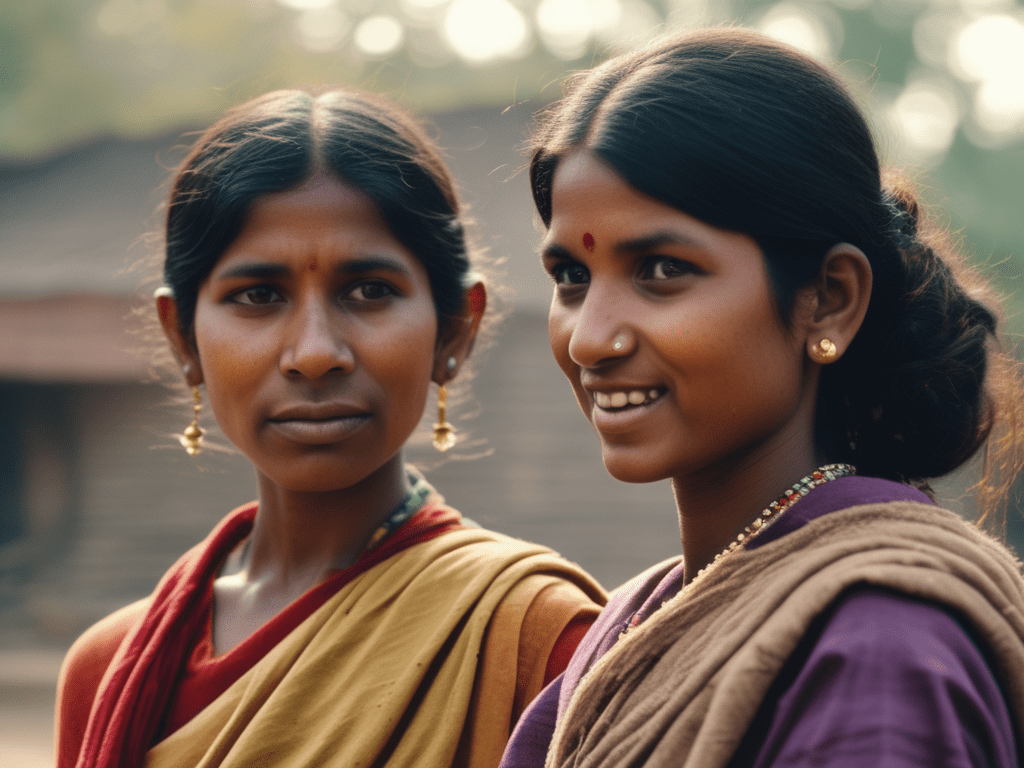
Growing up, I have seen many women around me who had long forgotten who they were other than for their identities as mothers and wives. They no longer knew what their desires were or what made them happy. All my childhood, I have genuinely wondered why women around me behaved as if they were inferior to men. I am not saying that I have not seen great mothers, breadwinning women, or hardworking, selfless women. Though I have seen many great women around me — being powerful, owning their voice, or being independent were not the words that could describe them. However, I was not expected to toe the lines of these women. I was encouraged to develop a voice and seek independence. I was confused, I didn’t know who to model or, who to look up to. The “strong” women I saw in newspapers were supposed to be my role models. It was almost like these distant “strong” women were extraordinary and had some secret genes owing to their success which the women in my immediate surroundings lacked.
The other day I watched Kiran Rao’s Laapataa Ladies on Netflix. Set in 2001, it shows us the transformative journey of two women, Jaya and Phool, in rural North India. What appealed to me most in the movie was how Rao shows that Indian women still need to win certain battles inside their own homes for them to be able to fly after their dreams. The movie draws our attention to how our homes are still spaces where equality is denied to women. The most poignant scene for me was when the character Jaya (Pushpa) asked Suraj’s mother about her favorite dish. Suraj’s mother replies: “Dikkat to ee hai ki hamko ab vo bhi yaad nahi ki hamko kaa pasand hai” (The problem is that I no longer remember what I like). She proceeds to say that her favorite dish is lotus stem curry, but she doesn’t cook it at all because the men in her family don’t like it. The scene conveys with finesse the subtle ways women are told to sacrifice even their tiniest wishes for men and their families. The scene might have felt relatable to many, and I dare say this still happens in many women’s lives out there in various ways.
The movie could easily be labeled as the proverbial old wine in a new bottle as it addresses the same old gender issues existing in our society. But can one blame the maker for addressing reality? Through a rather simplistic narrative, the movie ousts the misogyny in many arranged marriages happening in India. It shows how even to this day many Indian parents deem girls as financial burden as they are to be married off with expensive gifts (disguised dowry). When their own families treat the girl children as outsiders and inferior, how could we then expect these girls to have a sense of security? When Jaya’s parents, in the movie, opt to marry her off rather than let her pursue her education, it doesn’t come as a surprise to many of us Indians. This is a sad reality even today in many of our homes. When Rao’s Phool thinks being lost in the streets with no money and help is better than returning to her own home, it paints a picture of how married women struggle to feel their own family as a safe welcoming space. This again comes as no surprise when we encounter newspaper reports almost daily about married women putting up with abuse at the hands of their husbands and in-laws.
However, all is not bleak, and I can vouch for the fact that in the last three decades, women’s lives have changed revolutionarily in India. Mostly, it is an outcome of better education and employment opportunities. Hailing from a region in India that is well-known for its hundred percent literacy rate, I have seen the positive effects of this change in women’s lives. I grew up in this transition phase, where women were encouraged to fly after their dreams. Yet, in the back of my mind, there was always this fear of missing this magic gene that the strong women role models in newspapers had and that the women around me lacked. It took me years to understand that the women around me, the women I watched growing up were the strongest, fiercest women out there. Rao brings in the character Manju Maai to solve this conundrum for Phool. Actor Chhaya Kaddam skillfully brought to life the character of Manju Maai who imparts to Phool the importance of being independent. Manju Maai shows us how the “ordinary” women around us are extraordinary. Generations of such women sow the dreams in the hearts of their successors and believed in us to soar after our ambitions even when they couldn’t.
The most optimistic aspect of the movie is how the men in it are portrayed. Laapataa Ladies leaves us with a very hopeful picture of the future, and one important reason for it is how Rao brings to screen such gentle, compassionate men who are even willing to learn from the women in their lives. It is interesting to note how rare we see such men in our movies. I think it is important to show on screen that men being gentle and sensitive doesn’t take away any of their masculinity. We need more humane men in Bollywood movies rather than angry, violent heroes like Kabir Singh.
I had my initial reservations about the movie and doubted if it would be yet another dull social commentary. However, my doubts were unfounded, and I have to say the film was worth my time. Kiran Rao has made the movie so much more than a social commentary while, I believe, attempting to fulfill the hefty goal of making art for social transformation. The actors and screenplay aided her huge attempt and the movie felt like a sweet soulful melody. I can’t say how impactful Laapataa Ladies would be for everybody, and I am unsure if art has such a transformative effect. But I can confirm that the movie has made someone self-introspect.
 Hima's Pages
Leave a comment