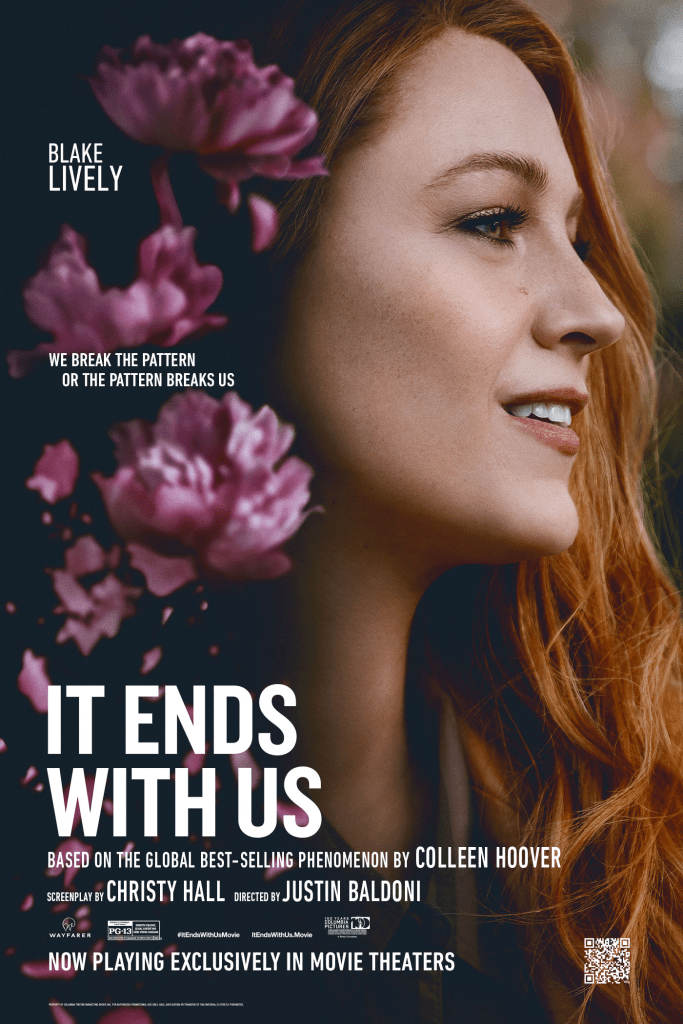
‘It Ends with Us’ was a movie that I was hesitant to watch because I knew the theme would be triggering for me. The never-ending controversies around the movie made me curious enough to watch it on Netflix months after its theatrical release. The movie is an adaptation of Colleen Hoover’s bestselling novel with the same title that talks about domestic violence. Justin Baldoni and Blake Lively play the lead characters in the movie, which has an urban finesse in its making. Everything looks a tad bit too perfect on screen; perhaps that is its flaw as well. The trailers and the marketing team likely made the movie appear overly glamorous and floral, undermining the crucial point of the movie to its own disadvantage.
The plot remains uncomplicated, yet captivating. After her father’s death, Lily Bloom (Blake Lively) moves to Chicago to open her own business. There she meets Ryle Kincaid (Justin Baldoni), and both fall in love. Everything looks too rosy and beautiful in the initial days. But things start to spiral soon when Kincaid becomes abusive towards Lily. The movie portrays the troubled home Lily grew up in, her abusive father, and how she was on the verge of continuing the cycle of trauma. The most crucial moment of the story is when Lily chooses to break the cycle of trauma and decides to leave the abusive relationship.
But didn’t everything look too easy for Lily? I understand this to be a major point of contention among people who criticized the portrayal of abuse in the movie. Honestly, I also found that part a little misleading. Could it be this easy for a domestic violence survivor to leave an abusive relationship? Sadly, no. In most cases, it takes about seven attempts for a victim before they can leave such relationships, mostly followed by unwanted pursuits, stalking, threats, etc. Everything seemed so well-aligned for Lily, which is often not the reality. But it’s a movie, isn’t it? So, if it gave courage to one domestic abuse victim to step out of that relationship and seek help, it probably did a great service to society. Also, if the movie brought more discourse about trauma and domestic violence, isn’t that great in itself?
It would be wrong not to address the sexual harassment case filed by the actor Blake Lively against her co-actor and director of the movie Justin Baldoni when we are talking about this movie. I can’t comment on who is in the wrong yet, and it’s still before the court to decide. But what I can say is that in cases of sexual harassment, we owe it to hear the side of the woman involved, keeping aside all the societal prejudices and pervasive biases against successful women.
 Hima's Pages
Leave a comment